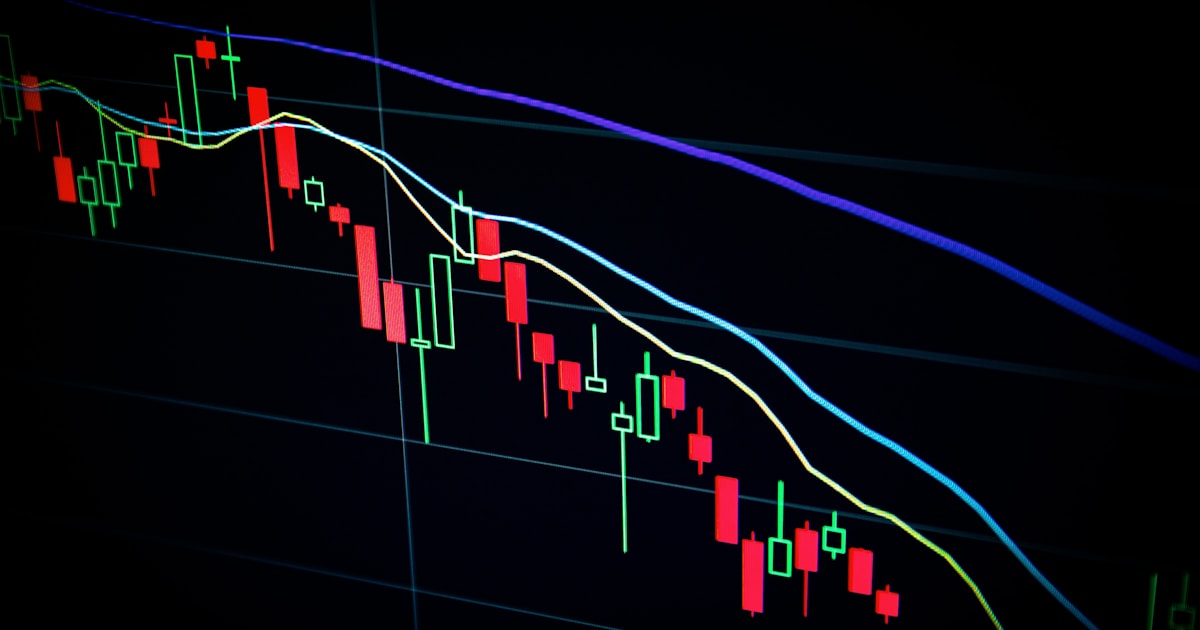
Quick answer: In ICT trading, a displacement leg is a strong, rapid, one-sided price move characterized by large candle bodies, minimal wicks, and the creation of a fair value gap. It signifies that large institutional orders have entered the market, validating structure breaks and order blocks. Traders use displacement to confirm that a market shift is genuine rather than mere noise or a liquidity grab.
What Is Displacement in ICT Trading? How to Tell a Real Move From Noise
Displacement is one of the most used words in ICT trading and one of the least defined. In short, it is a strong, fast, one-sided move in price that shows large orders have entered the market. Most ICT and SMC setups depend on it, because it is what separates a real shift from an ordinary wobble.
What does displacement look like?
You can recognise displacement by four features:
- Large candle bodies compared with the candles before them.
- Small wicks, showing little pushback from the other side.
- Several candles in the same direction, or one very large candle.
- A fair value gap left behind, because price moved too quickly to trade both sides.
If a move breaks a level by a few pips with small overlapping candles, that is not displacement.
Why does displacement matter?
It validates a structure break. A market structure shift only means something when the swing is broken with force. A break without displacement is often a liquidity grab that reverses.
It validates an order block. The order block worth trading is the one that produced displacement. A candle that led to a slow drift is not an institutional footprint.
It creates the entry. The fair value gap inside the displacement leg is where many ICT entries are taken on the retracement.
What is the usual sequence?
- Price sweeps a liquidity pool, such as an old high or low.
- Price reverses with displacement and breaks a short-term swing.
- The displacement leg leaves a fair value gap and an order block at its origin.
- Price retraces into that gap or block.
- Price continues in the direction of the displacement.
Sweep, displacement, retracement, continuation. If the second step is weak, the rest should not be traded.
How do you use it in practice?
- Wait for it. Do not enter at a level in anticipation. Let displacement confirm that the level held.
- Measure it against recent candles. Displacement is relative. A 15-pip candle is strong in a quiet session and ordinary during a news release.
- Check the timing. Displacement during the London or New York kill zones carries more weight than a move in thin hours.
- Use its origin for the stop. If price trades back through the start of the displacement leg, the idea is invalid.
Common mistakes
- Calling every big candle displacement. A news spike that is fully reversed within minutes is not the same thing. Look for follow-through.
- Entering during the displacement. Chasing the move gives a poor entry and a wide stop. The trade is on the retracement.
- Ignoring the higher timeframe. Strong displacement into a higher-timeframe level against the trend can be the end of a move, not the start of one.
Next step:
- get free SMC/ICT forex signals
- see today's signals
Next step:
- see today's signals
Next step:
Next step:
- see today's signals
Next step:
- see today's signals
Next step:
- see today's signals
Next step:
- see today's signals
Frequently asked questions
Is displacement the same as momentum?
It is a specific kind of momentum: sudden, one-sided, and leaving an imbalance. A steady trend has momentum without displacement.
Does displacement always leave a fair value gap?
Almost always. If there is no gap, the move was probably not fast enough to count.
Which timeframe should I judge it on?
The timeframe you take entries on, usually the 5-minute or 15-minute chart, after marking levels on the 1-hour or 4-hour chart.
***
*This article is educational and is not financial advice. Trading forex and gold carries a high risk of loss.*