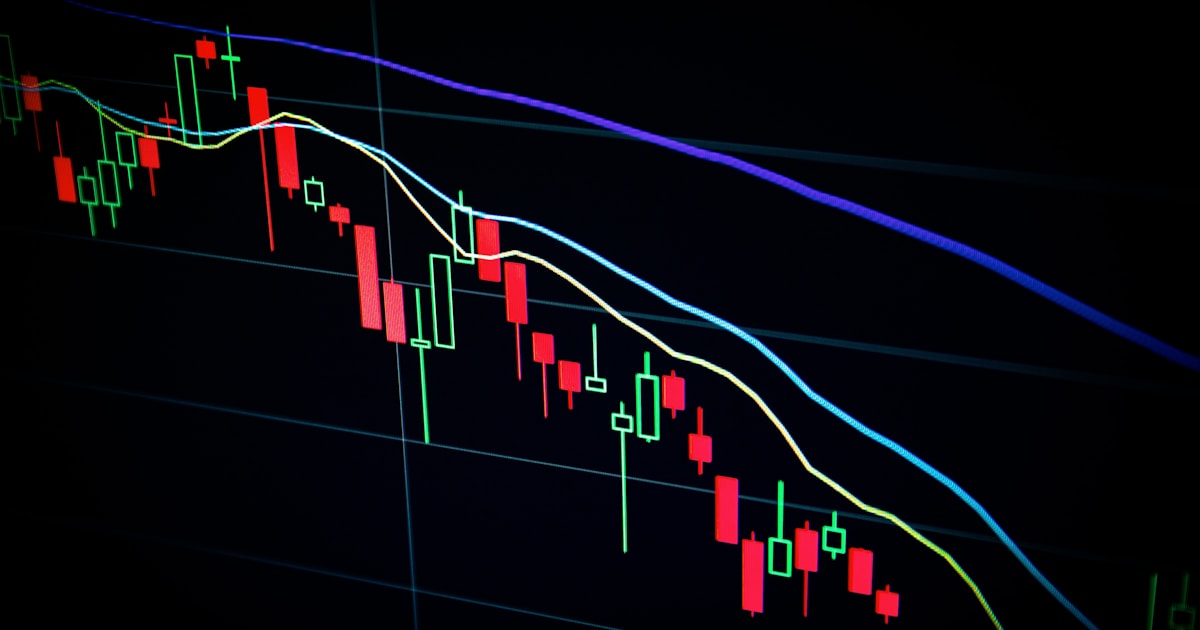
How to Trade NFP (Non-Farm Payrolls) Like an Institution: The Complete SMC Guide for 2026
TL;DR: NFP is the most volatile forex event of the month. Most retail traders lose money on it because they trade the initial spike. Institutions do the opposite — they USE the spike to sweep liquidity, then trade the real move. Here's the complete SMC/ICT framework for trading NFP profitably.
What Is NFP and Why Does It Move Markets?
The Non-Farm Payrolls (NFP) report is released by the US Bureau of Labor Statistics on the first Friday of every month at 8:30 AM ET (12:30 UTC). It measures the change in the number of employed people in the US during the previous month, excluding the farming industry.
Why it matters: NFP is the single most market-moving economic data point in forex. A single number — how many jobs were created — can move EUR/USD by 50-100 pips, gold by $20-40, and trigger volatility across every USD pair simultaneously.
Current context (September 2026):
- August 2026 NFP: +162,000 jobs (unemployment 4.1%)
- September 2026 consensus: ~55,000-70,000 jobs
- Fed Chair Kevin Warsh is hawkish — markets pricing 60% odds of a September rate hike
- A strong NFP → USD bullish (EUR/USD down, gold down)
- A weak NFP → USD bearish (EUR/USD up, gold up)
Why 90% of Retail Traders Lose Money on NFP
Here's what most retail traders do on NFP day:
- They guess the number. "I think NFP will be strong, so I'll buy USD before the release."
- They trade the initial spike. Price shoots up 30 pips in 10 seconds. They chase it.
- They get stopped out. The spike reverses within 2-5 minutes. Their stop gets hit.
- They revenge trade. Frustrated, they enter again — usually in the wrong direction.
The result: Whipsawed twice in 5 minutes. Account damaged. Confidence shattered.
Why Institutions Win on NFP
Institutions understand something most retail traders don't: NFP is not a directional event. It's a LIQUIDITY event.
Institutions don't care whether NFP is strong or weak. They care about where the liquidity is resting — the stop-losses above and below current price. Their algorithm uses the NFP volatility spike to sweep that liquidity, fill their large orders, and THEN move price in the real direction.
This is called the "Judas Swing" — a false move that betrays traders before the true move reveals itself.
The ICT/SMC NFP Framework: 4 Phases
Phase 1: Pre-NFP Preparation (Tuesday–Thursday)
What to do before NFP day:
- Map the HTF bias — Is EUR/USD bullish or bearish on D1/H4? This is your directional bias for the post-NFP move.
- Identify liquidity pools:
- Buy-Side Liquidity (BSL): Stop-losses above recent highs (retail breakout buyers' stops)
- Sell-Side Liquidity (SSL): Stop-losses below recent lows (retail breakout sellers' stops)
- Mark order blocks and FVGs:
- The order block that will act as your entry zone AFTER the NFP spike
- The FVG that price will likely fill during the retracement
- Check the economic calendar:
- What's the consensus forecast?
- What was the previous number?
- Is there a major deviation expected?
Example (September 2026 NFP):
- EUR/USD trading at 1.1621
- BSL above: 1.1650 (recent highs — retail stop-losses resting here)
- SSL below: 1.1580 (recent lows — retail stop-losses resting here)
- HTF bias: Bullish (ECB hiking, Fed uncertainty)
- Consensus: 55K-70K jobs
Phase 2: The NFP Release — The Judas Swing (8:30 AM ET / 12:30 UTC)
What happens at 8:30 AM ET:
Price EXPLODES. In the first 1-5 seconds, spreads widen to 10-20 pips. Price moves 20-50 pips in one direction. This is the Judas Swing — the false move.
The Judas Swing mechanism:
- NFP data releases. Let's say it's strong (bullish USD).
- Algorithm spikes EUR/USD DOWN to sweep the SSL below 1.1580.
- Retail sellers pile in, thinking it's a breakout. Their stops are now above.
- Price REVERSES violently — spikes UP through 1.1621 toward 1.1650 BSL.
- Retail sellers get stopped out. Their stop-buy orders fuel the upward move.
- Institutions have now filled their LONG positions at the discount prices near 1.1580.
- Price continues higher to 1.1670+ as the real move unfolds.
OR the reverse scenario:
- NFP is strong (bullish USD).
- Algorithm spikes EUR/USD UP first to sweep BSL above 1.1650.
- Retail buyers pile in. Stops now below.
- Price REVERSES down through 1.1621 toward 1.1580 SSL.
- Retail buyers stopped out. Stop-sell orders fuel the decline.
- Institutions filled SHORTS at premium prices near 1.1650.
- Price continues lower as the real move unfolds.
Key rule: NEVER trade the first 5-15 minutes of NFP. The initial spike is designed to trap you. Let it happen. Watch. Prepare.
Phase 3: Post-NFP Entry (8:45–9:30 AM ET / 12:45–13:30 UTC)
This is where you make money. After the Judas Swing completes (usually 2-10 minutes), the real institutional move begins. Here's how to catch it:
Step 1: Wait for the M15 candle to close.
The first M15 candle after NFP (8:30-8:45 AM) is pure chaos. Don't touch it. Wait for it to close.
Step 2: Identify the Market Structure Shift (MSS).
After the initial spike and reversal, look for a clear break of structure on M5 or M15:
- If the Judas Swing was DOWN then reversed UP: look for a bullish MSS (price breaks above the spike high with displacement)
- If the Judas Swing was UP then reversed DOWN: look for a bearish MSS (price breaks below the spike low with displacement)
Step 3: Wait for the FVG.
The displacement that creates the MSS will leave behind a Fair Value Gap (FVG) — a 3-candle imbalance. This is your entry zone.
Step 4: Enter on the retracement into the FVG.
When price retraces back into the FVG created by the displacement, enter in the direction of the MSS.
Step 5: Target the opposite liquidity pool.
- If you entered LONG (after downward Judas Swing): target the BSL above recent highs
- If you entered SHORT (after upward Judas Swing): target the SSL below recent lows
Phase 4: Trade Management
After entry:
| Stage | Action |
|-------|--------|
| Entry → TP1 (50% of range) | Original stop loss stays in place |
| TP1 hit | Move stop to breakeven, take 50% off |
| TP1 → TP2 (liquidity pool) | Trail stop by 1.5x ATR |
| Time exit | If price hasn't reached 50% of TP1 within 2 hours, consider closing |
Real NFP Trading Examples
Example 1: EUR/USD — Bullish NFP Setup
Scenario: NFP prints weak (40K vs 55K expected). USD bearish.
What happens:
- 8:30 AM: EUR/USD spikes DOWN to 1.1580 (Judas Swing — sweeps SSL)
- 8:32 AM: Price violently reverses UP — displacement candle creates bullish FVG at 1.1595-1.1605
- 8:35 AM: Price retraces into FVG. M5 shows bullish MSS confirmed.
- ENTRY: Long at 1.1600 (inside FVG)
- SL: 1.1585 (below the sweep low)
- TP1: 1.1650 (BSL above pre-NFP highs) — +50 pips
- TP2: 1.1680 (next liquidity pool) — +80 pips
- R:R: 1:3.3 to TP1, 1:5.3 to TP2
Example 2: XAU/USD (Gold) — Bearish NFP Setup
Scenario: NFP prints strong (90K vs 55K expected). USD bullish. Gold bearish.
What happens:
- 8:30 AM: Gold spikes UP to $4,500 (Judas Swing — sweeps BSL above recent highs)
- 8:33 AM: Price violently reverses DOWN — displacement creates bearish FVG at $4,470-$4,480
- 8:37 AM: Price retraces into FVG. M5 shows bearish MSS confirmed.
- ENTRY: Short at $4,475 (inside FVG)
- SL: $4,505 (above the sweep high)
- TP1: $4,420 (SSL below pre-NFP lows) — $55
- TP2: $4,380 (next liquidity pool) — $95
- R:R: 1:1.8 to TP1, 1:3.2 to TP2
The 10-Step NFP Trading Checklist
Print this. Bookmark it. Use it every NFP Friday.
Pre-NFP (Day Before)
- [ ] 1. Identify HTF bias (D1/H4) for each pair you trade
- [ ] 2. Mark BSL (above highs) and SSL (below lows) on H1 chart
- [ ] 3. Identify unmitigated order blocks and FVGs
- [ ] 4. Check consensus forecast and previous number
NFP Day (Pre-Release)
- [ ] 5. Reduce all open positions to half risk 30 minutes before release
- [ ] 6. Close any M5 scalp positions — don't hold through NFP
- [ ] 7. Set price alerts at BSL and SSL levels
During NFP (8:30 AM ET)
- [ ] 8. DO NOT TRADE for the first 5-15 minutes. Watch the Judas Swing.
- [ ] 9. Wait for M15 candle close, then look for MSS + FVG entry
Post-NFP (8:45 AM+)
- [ ] 10. Enter on FVG retracement in direction of MSS. Target opposite liquidity pool.
Which Pairs to Trade on NFP
Best Pairs for NFP Volatility
| Pair | Typical NFP Range | Why It Moves |
|------|------------------|-------------|
| EUR/USD | 40-80 pips | Most liquid pair, direct USD exposure |
| XAU/USD (Gold) | $20-40 | Gold inversely correlated to USD |
| GBP/USD | 40-70 pips | High liquidity, clean SMC structure |
| USD/JPY | 30-60 pips | Direct USD pair, BoJ adds volatility |
| XAG/USD (Silver) | $0.50-1.50 | Follows gold but more volatile |
| NAS100 | 50-100 points | US equities sensitive to rate expectations |
Pairs to AVOID on NFP
| Pair | Why to Avoid |
|------|-------------|
| Exotic pairs (USD/TRY, USD/ZAR) | Massive spreads, slippage, no liquidity |
| Cross pairs (EUR/GBP, EUR/JPY) | Less direct USD impact, confusing moves |
| Low-volume pairs (NZD/USD, AUD/USD) | Gappy, spread-widening, unreliable |
Common NFP Mistakes That Destroy Accounts
Mistake #1: Trading the Initial Spike
The initial 30-second spike is pure algorithmic liquidity hunting. Spreads widen to 10-20 pips. You'll get filled at the worst possible price. By the time your order fills, price has already reversed.
Fix: Wait at least 5 minutes. Let the M15 candle form.
Mistake #2: Using Tight Stop Losses
NFP volatility can easily move 30-50 pips in both directions within 5 minutes. A 15-pip stop will get hit by normal volatility, not by a wrong trade direction.
Fix: Use structure-based stops — place them below/above the liquidity sweep, not at an arbitrary pip distance.
Mistake #3: Guessing the Number
You are not an economist. Your guess about whether NFP will be 50K or 70K is no better than a coin flip. And even if you guess right, the market's REACTION to the number is what matters — not the number itself.
Fix: Don't predict. React. Wait for the market to show you the direction, then trade the retracement.
Mistake #4: Overleveraging
NFP days see 3-5x normal volatility. If you normally risk 2%, reduce to 1% on NFP day. One bad NFP trade with full leverage can wipe out a month of gains.
Fix: Always reduce position size by 50% on NFP day.
Mistake #5: Holding Through the Spread
At exactly 8:30:00 AM, spreads can widen from 0.5 pips to 15+ pips. If you have a pending order, it might trigger at a terrible price.
Fix: Never have pending orders during NFP. Trade manually after the initial spike settles.
NFP Risk Management Rules
| Rule | Value |
|------|-------|
| Max risk per NFP trade | 1% of account (reduce from normal 2%) |
| Max spread to enter | 3 pips (if spread > 3, wait for it to normalize) |
| Minimum wait after release | 5 minutes (preferably 15 min — wait for M15 close) |
| Max trades on NFP day | 2 (one setup, one re-entry if first stops out) |
| Stop-loss type | Market stop (not guaranteed stop — expect slippage) |
| Position close before weekend | If NFP is on Friday, close all positions before London close |
The NFP Session Timeline (What Happens Minute by Minute)
| Time (ET) | What's Happening | What You Should Do |
|-----------|-----------------|-------------------|
| 8:25 AM | Pre-NFP tension. Price often ranges. | Review your map. BSL? SSL? FVG? |
| 8:29 AM | Last-minute positioning. Sometimes a small move. | Do NOT enter. Set price alerts. |
| 8:30:00 AM | NFP RELEASES. Price explodes. Spreads widen 10-20x. | WATCH. Do not trade. Observe the Judas Swing. |
| 8:30-8:35 AM | Initial spike completes (usually 20-50 pips). | Identify: was this a BSL sweep or SSL sweep? |
| 8:35-8:40 AM | Price reverses from the spike. Displacement begins. | Watch for M5/M15 MSS forming. |
| 8:40-8:45 AM | First M15 candle closes. Direction confirmed. | Identify the FVG left by the displacement. |
| 8:45-8:50 AM | Price retraces into the FVG. | ENTER HERE. In direction of MSS. |
| 8:50-9:30 AM | Real move unfolds toward liquidity target. | Manage trade. Move SL to BE after TP1. |
| 9:30 AM | NY stock market open. May add volatility. | Watch for second-wave moves. |
| 10:00-11:00 AM | NFP move typically completes. | Take profits. Don't overstay. |
Advanced NFP Concepts
The "Second Wave" Setup
Sometimes the initial NFP move is a setup for a bigger move later in the session:
- 8:30 AM: NFP spike + Judas Swing + reversal (as described above)
- 9:30 AM: NY stock market open adds a SECOND wave of volume
- 10:00-11:00 AM: The real institutional move often accelerates here
If you missed the first entry, the 9:30 AM NY open often provides a second chance — look for a new FVG or order block to form during the stock market open volatility.
The "NFP Failure" (Turtle Soup)
Sometimes the NFP reaction completely fails — price spikes in the "expected" direction and just keeps going. No Judas Swing, no reversal. This happens when:
- The number was extremely surprising (far from consensus)
- Pre-NFP positioning was one-sided (everyone was on the same side)
- Central bank speakers reinforce the data later in the day
How to handle it: If price doesn't reverse within 15 minutes and the M15 candle closes in the direction of the spike, the Judas Swing may not happen. In this case, wait for a pullback to a premium/discount array and enter in the spike direction.
The "Weekend NFP" Effect
When NFP is on a Friday (which it usually is), the NFP move can extend into Monday's open as a gap. If you hold positions over the weekend:
- Strong NFP (USD bullish): Expect USD gap up / EUR gap down on Monday
- Weak NFP (USD bearish): Expect USD gap down / EUR gap up on Monday
- Rule: Only hold H4+ positions over the weekend. Never hold M5 scalps.
NFP and the TebotechSignals 22-Layer Neural Stack
Our Neural Intelligence Stack v2.0 includes specific NFP-aware layers:
- Physics-Informed Layer: Detects jump-diffusion probability (flags NFP as elevated jump risk)
- HMM Regime Detector: Classifies NFP period as VOLATILE regime (reduces position size automatically)
- GAN Adversarial Stress Testing: Tests each signal against 1000 synthetic NFP scenarios
- Bayesian Uncertainty: Increases epistemic uncertainty on NFP day (wider credible intervals)
- Multi-Agent Consensus: Agent-Risk specifically checks for news proximity (can dissent on NFP day)
Learn more about our 22-layer AI system →
Frequently Asked Questions
What time does NFP release?
NFP releases at 8:30 AM Eastern Time (12:30 UTC) on the first Friday of every month.
Can I trade NFP with a small account?
Yes — but reduce your risk to 0.5% per trade (instead of 1-2%). NFP volatility can cause slippage that exceeds your intended risk.
What's better: trading before or after NFP?
After. Always after. The pre-NFP period is characterized by low liquidity and unpredictable whipsawing. The post-NFP period (after the initial spike settles) offers clean structure and high-probability setups.
How much does EUR/USD move on NFP?
On average, EUR/USD moves 40-80 pips on NFP day. Extreme deviations can cause 100+ pip moves. The initial spike is usually 20-40 pips, with the real move (after the Judas Swing) adding another 20-40 pips.
Should I close my positions before NFP?
If you're holding M5 or M15 scalp positions: YES, always close. If you're holding H4+ swing positions: reduce risk by 50% but you can hold if your stop loss is structure-based (not tight).
What if I miss the NFP entry?
Wait for the 9:30 AM NY stock market open. It often provides a second volatility wave and a new entry opportunity. Don't chase the initial move.
Risk Disclaimer
⚠️ Trading NFP carries exceptional risk. Volatility can exceed 5x normal levels. Spreads widen dramatically. Slippage is common. Stop-loss orders may be filled at prices significantly worse than your set level. Never risk more than 1% of your account on an NFP trade. Always wait at least 5 minutes after the release before entering. Past performance does not guarantee future results. This article is for educational purposes only and does not constitute financial advice.
*Get our NFP-day signals · Check our verified performance · Learn SMC trading · Join our free WhatsApp channel · Upgrade to Pro from $5/mo*