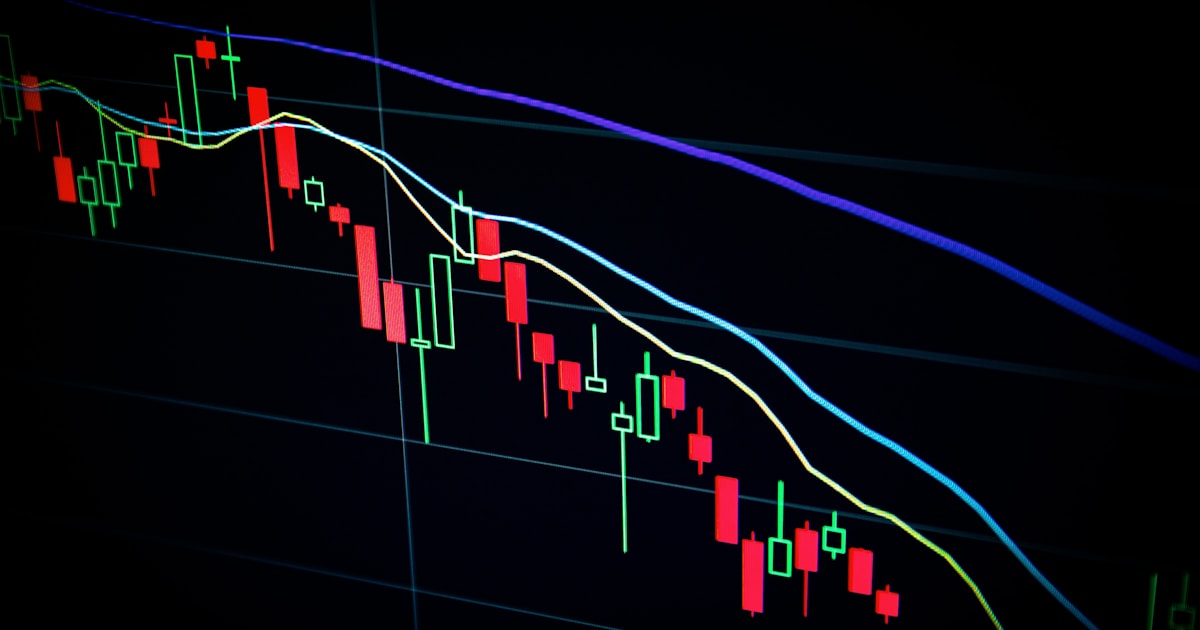
Quick answer: On 14 October 2026, the engine identified a sell limit opportunity on EUR/ZAR during the London/New York overlap. The trade was based on a H4 downtrend and a 50% retracement of the previous down-leg. Despite a move reaching 0.83R in our favour, price reversed, resulting in a time-based exit after 120 hours with a final net result of +0.4R.

*Real H1 chart: blue = entry, red = stop, green = TP1-TP3. Times in UTC.*
The setup: why the engine took it
The engine identified a bearish structure on the H4 timeframe where the EMA50 was positioned below the EMA200, confirming a clear downtrend. Entry was placed at a 50% pullback of the most recent H4 downward move to capture the continuation. The H1 RSI at 58 indicated the asset was pulling back rather than showing signs of extreme momentum. The stop loss was placed beyond the recent leg high to allow for market volatility. Note: This trade followed the engine's older indicator-based rules; since 15 October 2026, the methodology has transitioned to five distinct Smart Money checks without indicators.
The trade plan
| Attribute | Detail |
| :--- | :--- |
| Entry | 18.48947 |
| Stop loss | 18.59729 |
| TP1 | 18.38164 |
| TP2 | 18.27382 |
| TP3 | 18.16599 |
| Risk (pips) | 1078.2 |
| Order type | LIMIT |
| Session | London / New York overlap |
What happened
| Time | Event |
| :--- | :--- |
| 2026-10-14 12:00 UTC | Signal published |
| 2026-10-14 13:00 UTC | Order filled |
| 2026-10-15 04:00 UTC | Stop loss touched |
| 2026-10-19 13:00 UTC | Trade closed (TIME_EXIT) |
The trade was filled one hour after publication. It moved in our favour, reaching a peak of 894.1 pips or 0.83R, but failed to reach TP1. The stop was touched on 15 October, and the remaining position was closed after 120 hours as per the time-exit protocol.
Result
The final outcome was a TIME_EXIT with a total result of +0.4R and 435.3 pips. Per the management plan, the trade allows for partial closes at three target levels. Because the trade duration exceeded 120 hours without hitting the targets, the open portion was liquidated at the market rate, contributing to the final calculated R-multiple.
What this trade teaches
- Market movement does not always align with structural signals: Despite a favourable H4 trend, the trade reached 0.83R but failed to trigger the first take-profit level.
- The importance of time-based exits: Holding for 120 hours demonstrates the discipline of not keeping positions open indefinitely when targets remain unreached.
- Stop management: The stop loss was touched on 15 October, illustrating that price action can invalidate a limit entry setup quickly during active sessions.
Frequently asked questions
Why was this trade closed after 120 hours?
The strategy includes a time-based exit rule. If a trade remains open for more than 120 hours without hitting the primary targets, it is closed at market price to free up capital and risk for new opportunities, preventing stagnant trades from consuming account resources unnecessarily.
Did the trade ever hit the stop loss?
Yes, the price action hit the predefined stop loss level of 18.59729 on 15 October 2026 at 04:00 UTC. This early stop-out occurred while the trade was still active, significantly impacting the potential for reaching the higher-level targets originally planned.
How does the 0.4R result get calculated?
The result is based on the weighted sum of partial closures and the final exit value after 120 hours. Since the trade did not hit any take-profit levels, the final result reflects the price position at the time of the forced closure relative to the entry risk defined at the start.
Every signal, win or lose, is on the record: weekly results · how the signals are built · today's signals · get free signals.
*Educational only, not financial advice. Past results do not guarantee future results.*